Head & Neck Ablation
& Reconstruction
with Extended Reality — VR & Cadaveric Demonstrations
2027 fees for two day course £950
2027 Course Dates
MAY
18
Tuesday
MAY
19
Wednesday
Course Details
University of Surrey
Guildford, UK
10 Places
2 delegates per cadaver
Mr Calum Honeyman
Course Convenor
Want to Sponsor?
Support the course and reach delegates — see our sponsor packages.
Course Overview
This intensive two-day cadaveric course provides hands-on training in head and neck ablative surgery and microsurgical reconstruction, enhanced by extended reality (XR) technology including virtual reality (VR) demonstrations.
Delegates will work in pairs on fresh-frozen cadaveric specimens, practising key flap harvest techniques, ablative procedures, and microvascular anastomosis under expert faculty supervision. VR simulations are integrated throughout to reinforce surgical anatomy and planning.
🦴
Ablative Surgery
Mandible, maxilla, tongue & floor of mouth resections
🔬
Microsurgery
Free flap harvest, insetting & microvascular anastomosis
🥽
Extended Reality
VR-enhanced anatomy and surgical planning sessions
Course Aims
- 1
Understand the surgical anatomy relevant to common free flaps used in head and neck reconstruction.
- 2
Perform dissection and harvest of key free flaps including ALT, radial forearm, fibula, scapula, gracilis, MSAP, and DCIA flaps.
- 3
Practise ablative techniques for mandible, maxilla, tongue, and floor of mouth resections.
- 4
Develop confidence in microvascular anastomosis and free flap insetting.
- 5
Apply virtual surgical planning concepts to complex reconstructive cases.
- 6
Integrate extended reality (VR) tools to enhance anatomical understanding and surgical preparation.
Course Objectives
By the end of the course, delegates will be able to:
Identify and dissect the vascular pedicles of the anterolateral thigh, radial forearm, fibula, scapula, gracilis, MSAP, and DCIA flaps on a cadaveric specimen.
Perform a segmental and marginal mandibulectomy, infrastructure and total maxillectomy, and glossectomy with correct oncological margins.
Harvest and inset a free flap with appropriate skin paddle design and pedicle positioning.
Perform end-to-end and end-to-side microvascular anastomoses using standard microsurgical technique.
Describe the principles of virtual surgical planning and the use of cutting guides and patient-specific implants.
Use VR simulation to rehearse surgical steps and correlate virtual anatomy with cadaveric findings.
Discuss recipient vessel selection, flap monitoring, and common complications in free flap reconstruction.
Location & How to Get There
Leggett Building, University of Surrey, Guildford, GU2 7WG
Open in Google MapsBy Train
Guildford Station (South Western Railway) — 15-min walk or 5-min taxi to Stag Hill Campus.
On Foot
Exit station, turn left, follow University signs. Cross pedestrian bridge — Leggett Building is near the main lake.
By Car
Sat-nav: GU2 7XH. Enter via main Stag Hill entrance. Limited visitor parking (pay-and-display) near Leggett Building.
By Bus
Routes 3, 4, 5, 37 from Guildford Station stop directly outside the University entrance.
Course Faculty
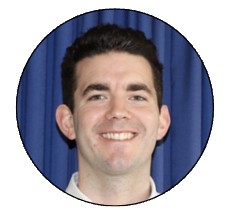
Mr Calum Honeyman
Course Convenor
Consultant Plastic and Reconstructive Surgeon
University Hospitals Plymouth NHS Trust
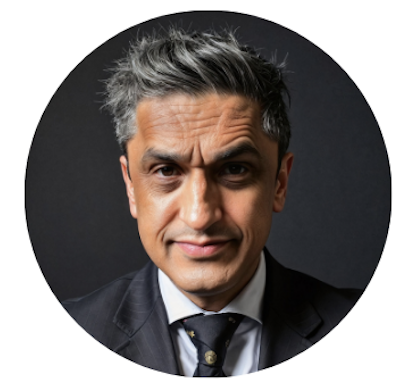
Prof Jag Dhanda
Course Organiser
Consultant OMFS/H&N Surgeon
Professor of Surgery
Queen Victoria Hospital, East Grinstead
Brighton and Sussex Medical School
CEO VRiMS